

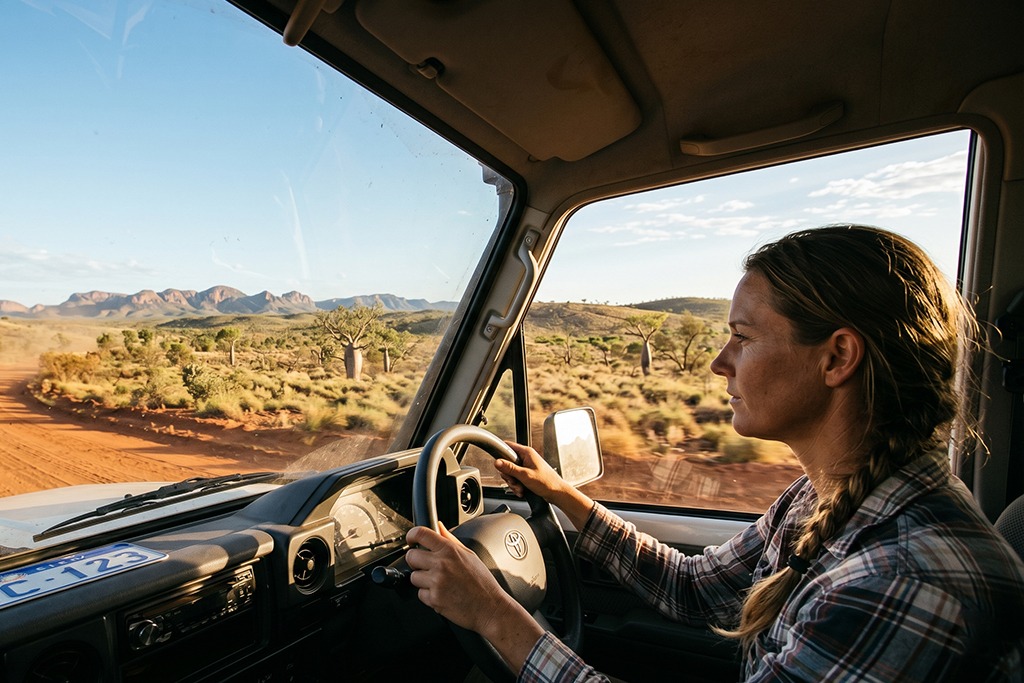
Getting behind the wheel of a hire car in Perth is one of the best ways to experience Western Australia. The freedom to follow the coast, detour into the Darling Range, or drive down to Margaret River at your own pace is what hire car travel is all about.
To do it safely and without receiving a fine, you need to understand the road rules that apply in Western Australia. Some of these are consistent with road rules across Australia. Others are WA-specific or differ from rules in your home country. Burswood Car Rentals has been on these roads for over 42 years and this is what every hire car driver needs to know. Browse our fleet of hire cars once you are ready to book.
Hire a Car in Perth With ConfidenceBurswood Car Rentals. 42+ years. No hidden fees. From $25/day. Quality Tourism Accredited. 24/7 service. |
Rule 1: Drive on the Left
Australia drives on the left-hand side of the road. Vehicles have right-hand drive, which means the driver sits closest to the centre of the road. For visitors from the USA, Canada, most of continental Europe, China, Japan (which also drives on the left), and many other countries, this requires conscious adjustment.
The adjustment period is real. Research on road safety for international visitors to left-hand drive countries consistently identifies the first few days as the highest-risk period. Take extra care at low-traffic intersections, when turning left out of driveways or parking areas, and at roundabouts where the correct path of travel requires brief but active thought.
Rule 2: Speed Limits in WA
Speed limits in Western Australia are enforced by fixed and mobile speed cameras, and penalties for exceeding the limit apply even by small margins. The key speed limits to know:
- 50 km/h: the default speed limit in residential areas. Unless a sign shows a different limit, you should assume 50 km/h applies on residential streets
- 60 km/h: applies on many arterial roads within the metropolitan area. Look for posted signs
- 80 km/h: major arterial roads and some highways near the metropolitan fringe
- 100 km/h: most rural highways and country roads, unless a higher or lower limit is posted
- 110 km/h: applies on designated freeways and highways. Most sections of the Mitchell and Kwinana freeways are 100 to 110 km/h; look for the posted signs
- School zones (40 km/h): a reduced 40 km/h limit applies in school zones when children are arriving or leaving school. Electronic signs indicate when the limit is active. Exceeding this limit carries additional penalties
| ⚠️ Speed camera enforcement: WA has fixed speed cameras at many intersections and on highways, as well as mobile camera vehicles that can operate anywhere. Speed cameras operate 24 hours a day and do not require police presence. The fine for speeding is issued to the registered owner of the vehicle, which in the case of a hire car will be forwarded to you by the rental company. |
Rule 3: Seatbelts Are Mandatory for Everyone
Every occupant of a vehicle in Western Australia must wear a properly adjusted seatbelt or approved child restraint. This applies to the driver, all front seat passengers, and all rear seat passengers. There are no exceptions for short trips or low-speed travel.
Infants and young children must be secured in an approved child car seat or booster appropriate to their age and weight. If you are travelling with young children, confirm your child seat requirements when booking your hire car and advise Burswood Car Rentals of any child restraint needs before your rental period begins.
| 💡 Child seats: If you are hiring a car in Perth with young children, mention this when you contact Burswood Car Rentals. We can advise on child seat options for your hire. Bringing your own approved child seat if travelling from interstate is also an option for parents who prefer consistency. |
Rule 4: Mobile Phones
Using a handheld mobile phone while driving is illegal in Western Australia. This covers making or receiving calls, sending or reading messages, and any use that requires you to hold the phone. The penalty applies whether the vehicle is stationary at traffic lights or moving.
The permitted use model for mobile phones while driving:
- Hands-free phone use (Bluetooth, hands-free cradle, car audio integration): permitted for licence holders who hold a full licence. The phone must not be touched while the vehicle is in motion
- Mounted GPS and navigation: permitted when the device is secured in a suitable mount. You must not touch or manually interact with the device while the vehicle is moving
- Learner and probationary licence holders: may not use a mobile phone in any capacity, including hands-free, while driving
- GPS use on hire cars: using your phone’s GPS in its car cradle with pre-set directions is permitted for full licence holders. Set your destination before you begin driving
Rule 5: Drink Driving Laws
Western Australia has strict drink driving laws with blood alcohol concentration (BAC) limits that apply to different categories of driver. The specific limits and penalties are set by the Road Traffic Act and are subject to change. As a general guide:
- Full licence holders: a BAC limit applies (the general limit in most Australian states is 0.05)
- Learner licence holders and most probationary licence holders: a zero BAC limit applies
- Drivers of heavy vehicles and drivers carrying passengers for hire or reward: zero BAC applies
| 📋 Verify current limits: BAC limits and penalties are determined by WA legislation and are subject to change. Always verify the current legal limits with Main Roads WA at mainroads.wa.gov.au or the WA Police website before driving in Western Australia. Random breath testing is conducted regularly by WA Police. |
Rule 6: Roundabouts
Roundabouts are common throughout Perth and are used extensively at suburban intersections as an alternative to traffic lights. The give way rule at a roundabout in WA is: give way to vehicles already on the roundabout (i.e. vehicles approaching from your right as you enter).
The correct approach to a roundabout:
- Slow down as you approach
- Check for any vehicle on the roundabout that has not yet passed your entry point
- If the roundabout is clear, enter and proceed in the direction you are travelling (roundabouts in Australia flow in a clockwise direction)
- Indicate right if you are taking anything other than the first exit. Indicate left as you approach your exit. Do not indicate left as you enter unless you are taking the first exit immediately on your left
| 💡 Roundabout indication: The indicator rules at roundabouts catch many international visitors off guard. The key principle: right indicator as you enter if going past the first exit, left indicator as you prepare to take your exit. When in doubt, indicate left early and exit safely at a speed that gives other drivers confidence about your intentions. |
Rule 7: Merging
Where two lanes merge into one in Western Australia (a zip merge situation), the rule is to give way to the vehicle that is ahead of you at the point where the lanes merge. You do not automatically give way to the vehicle in the lane that is continuing; the give way obligation is based on position at the merge point, not which lane is ending.
Rule 8: Traffic Lights
Traffic lights in WA follow the standard Australian sequence: green (proceed if safe), amber (prepare to stop), red (stop). The amber light means prepare to stop if it is safe to do so. Accelerating through an amber light is not permitted.
A left turn on red is not generally permitted in Western Australia unless specifically signed as permitted at a particular intersection. Do not turn left on red unless there is a sign explicitly allowing it.
Rule 9: Give Way to Pedestrians
In Western Australia, drivers must give way to pedestrians at marked pedestrian crossings (including zebra crossings) and at intersections where pedestrians are crossing the road you are turning into. This means that if you are turning left or right at an intersection and pedestrians are crossing the road you are entering, you must wait for them to cross before proceeding.
Rule 10: Driving Tired
Fatigue is one of the leading causes of serious road crashes in Western Australia, particularly on regional highways where long, straight roads and limited traffic can reduce driver alertness. WA road safety authorities consistently identify fatigue as a major risk factor on country roads.
If you feel tired while driving, pull over in a safe location and rest. Driver reviver stops are positioned on major regional routes and provide free coffee and rest opportunities. Do not push through fatigue on long drives.
Main Roads WA publishes detailed current road rules, including downloadable guides, at mainroads.wa.gov.au. This is the authoritative source for all current WA driving regulations. For questions about your specific hire car or booking, contact the Burswood Car Rentals team directly.
Book Your Perth Hire Car TodayBurswood Car Rentals: trusted by visitors to Perth for over 42 years. No hidden fees, no stickers, great rates. Book online. |
Frequently Asked Questions
Can I use my overseas driving licence in Western Australia?
Visitors to Western Australia can generally drive on their overseas licence for the duration of their visit, provided the licence is current and valid. If the licence is not in English, an international driving permit (IDP) is also required. Check the current requirements with the WA Department of Transport before your visit, as conditions vary based on your country of origin and length of stay. See Burswood Car Rentals’ FAQ page for licence requirements specific to hiring with us.
What is the speed limit on Perth freeways?
Speed limits on Perth freeways are posted on signs and typically range from 80 to 110 km/h depending on the section. Variable speed limit signs are used in some areas to manage traffic flow and safety conditions. Always observe the posted signs rather than assuming a fixed freeway speed, as limits can change between sections.
Are there toll roads in Perth?
As of the time of writing, Perth does not have toll roads on its main freeway network. The major freeways (Mitchell and Kwinana) are free to use. Road conditions and tolling arrangements may change, so check current information with Main Roads WA before your visit.