

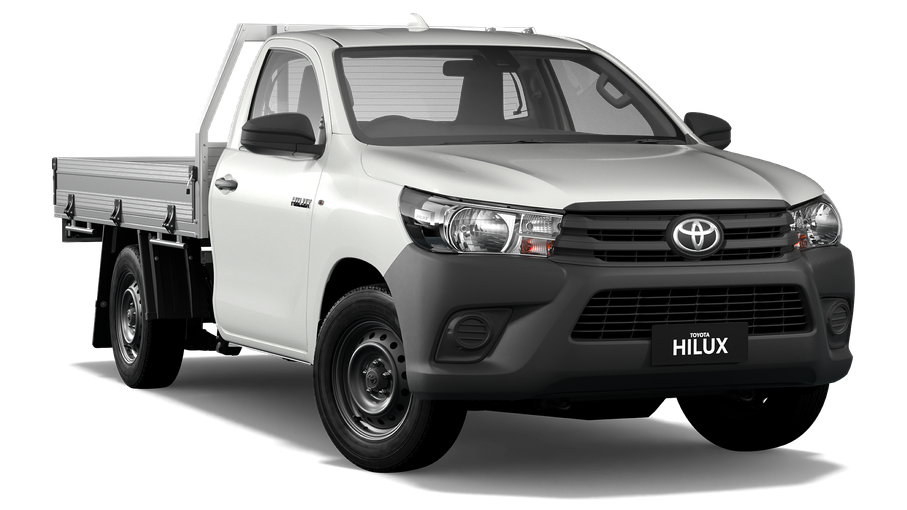
If you are moving a fridge, taking green waste to the tip, picking up flat pack furniture or running tools to a job site, a ute is the right vehicle. If you are moving a whole household, a ute on its own will cost you more trips than it saves, and a ute towing a trailer is usually the better answer. That is the short version, and for most Perth jobs it is the whole answer.
The longer version matters because hiring the wrong vehicle is expensive in a way that does not show up on the invoice. It shows up in the third trip back to Osborne Park, in the couch that did not fit, and in the load that shifted on the Graham Farmer Freeway. This guide covers what a ute is genuinely good for in Perth, what Western Australian law requires of you once something is in the tray, and how to work out whether you need the ute, the trailer, or both.
What is a hire ute actually good for?
A ute earns its keep when the load is heavy, dirty, awkwardly shaped or all three. The open tray is the point. You are not trying to angle a wardrobe through a door aperture or worrying about what a bag of garden soil is doing to the boot carpet.
The jobs a ute handles better than anything else in a hire fleet:
- Tip runs. Green waste, renovation offcuts, an old mattress. Perth’s transfer stations are set up for utes and trailers, and an open tray is far quicker to unload than a boot.
- Building and landscaping supplies. Bagged soil, pavers, timber lengths, plasterboard sheets. Bunnings and the trade suppliers along Great Eastern Highway load straight into a tray.
- Single large items. A fridge, a washing machine, a bed base, a ride on mower. One item, one trip, no disassembly.
- Tools and trade gear. If you are working across sites for a week and need everything with you, a dual cab gives you a locked cabin for the valuable gear and a tray for the rest.
- Anything wet, sandy or muddy. Boat gear after a morning at Hillarys, camping equipment coming back from Lancelin, surfboards and wetsuits. A tray hoses out.
The jobs a ute handles badly are the ones people most often hire one for. A full house move is the main offender. A tray holds a lot less than it looks like it does once boxes are stacked to a height that can actually be strapped down, and every load is exposed to weather and to the road.
Do you need a ute, a trailer, or both?
This is the question that decides the booking, and it is worth two minutes of thought before you book anything.
A ute on its own
Right when the load is heavy for its size and you want to load and unload quickly. Soil, sand, pavers, appliances, tools. A ute is also easier to park and reverse than any towing combination, which matters if the job is in Northbridge or somewhere in the western suburbs with a narrow verge.
A car or SUV towing a trailer
Right when the load is bulky rather than dense, and when you also need to carry passengers in comfort. A trailer gives you volume. It is also the better answer for a single awkward item that will not fit in a tray, like a long ladder or a canoe.
A ute towing a trailer
Right for a genuine house move or a big clean out. This is the combination that turns a three trip job into a one trip job. Burswood Car Rentals hires braked tandem trailers alongside its Toyota Hilux utes, so both halves of the combination can come from the same booking and you are not coordinating two suppliers on the same morning.
Worth knowing before you commit to towing. In Western Australia the Road Traffic Code 2000 sets a statutory maximum of 100 km/h for any vehicle towing a trailer, regardless of what the trailer weighs and regardless of the posted limit on the road. It is not signposted. If your run includes a stretch of highway zoned at 110, you are still capped at 100 the moment a trailer is on the back.
What licence do you need for a hire ute in WA?
A standard C class licence is enough. It covers vehicles up to 4.5 tonnes gross vehicle mass, which takes in the single cab and dual cab utes that make up a hire fleet. You do not need a light rigid licence or any endorsement.
Towing does not change the licence class either, provided the combination stays within the limits of the tow vehicle and the trailer. What it does change is how the vehicle behaves, which is a separate problem and one that catches out drivers who have never towed.
If you hold an overseas licence, the licence itself is generally not the obstacle. The hire company’s own requirements are. Confirm those when you book rather than at the counter.
How do WA load restraint rules work?
This is the part most guides get wrong, and it is worth getting right because Western Australia is genuinely different from the eastern states.
The Road Traffic (Vehicles) Regulations 2014 reference the Load Restraint Guide 2004, Second Edition. Queensland, New South Wales, Victoria, Tasmania, South Australia and the ACT moved to the Load Restraint Guide for Light Vehicles 2018. Western Australia and the Northern Territory did not. The National Transport Commission has said there is no material practical difference between the performance standards in the two editions, but the version with legal standing in WA is the 2004 guide.
What that means for you in the tray of a ute is straightforward. Your restraint has to be strong enough that the load does not move under the forces of normal driving. The headline performance standard is that the restraint must withstand 0.8 times the mass of the load in the forward direction, which is the force generated by hard braking. The guide sets lower standards for rearward, sideways and vertical movement. In plain terms, the forward direction is the one that will catch you out, because braking is where a load wants to go through the back of the cab.
The guide is guidance, not prescription. You can restrain a load any way you like as long as you can demonstrate it meets those performance standards.
What that looks like in practice
- Use rated straps and ratchet tie downs, not rope. The Department of Transport is explicit about this. Rope stretches, loosens and is almost impossible to tension properly.
- Use the rated anchor points. Check them for damage before you load. An anchor point that has been bent is not rated any more.
- Cover loose material with a net or tarp. Anything that can lift out in airflow needs to be contained, not just held down. Bagged mulch at 100 km/h behaves differently to bagged mulch in a driveway.
- Load heavy items forward and low, over or ahead of the rear axle, and spread the weight evenly across the tray rather than to one side.
- Tie down at an angle, not straight across a tall load. A strap running flat over the top of a high load does very little to stop it sliding forward.
- Check the load during the trip. Anything that can settle will settle, and a strap that was tight in the driveway can be slack twenty minutes later.
If you are putting a ladder or long timber on a roof rack rather than in the tray, the same principle applies and there is a weight limit on the rack itself. The Department of Transport publishes a bulletin specifically on tradespeople’s roof racks.
What can go wrong, and how to avoid it
Overhanging loads
Timber, pipe and ladders routinely overhang the back of a tray. There are limits on how far a load may project and requirements for marking an overhanging load so it is visible to other drivers. If your load is going to hang out the back, plan for it before you load rather than improvising at the supplier.
The load that fits but should not travel
A load can be within the tray and still be unsafe. Loose bricks stacked without restraint, an unsecured toolbox, a gas bottle rolling around. If it can move, it will, and a hard stop on Orrong Road is enough to prove it.
Passengers in the tray
Not permitted, in any circumstances, and prohibited by any hire agreement you will sign. Everyone travels in a seat with a restraint.
Assuming a dual cab has the same tray as a single cab
It does not. A dual cab trades tray length for a second row of seats. If your load is long and you also need to carry three passengers, that is the trade off to think about before you book, and it is often the point at which a trailer starts to make sense.
Single cab or dual cab?
The choice comes down to whether you are moving people or moving things.
A single cab gives you the longer tray. If the job is genuinely a load carrying job and there are one or two of you, this is the more useful vehicle. Long items sit inside the tray rather than hanging over the tailgate.
A dual cab gives you a back seat and a shorter tray. It is the right call when the crew travels together, when you want a lockable cabin for tools and laptops, or when the ute is doing double duty as a work vehicle during the week and a family vehicle on the weekend. Most people hiring a ute for a few days want the dual cab, and most people hiring one for a specific heavy job want the single cab.
Hiring a ute for trade use
Trade hire is a different problem to a weekend tip run, and it is worth treating it as one.
The usual driver is capacity rather than replacement. A business with its own vehicles hits a fortnight where there is one more job than there are utes, or a vehicle goes in for repair in the middle of a run. Hiring to cover that gap is cheaper and faster than buying, and it does not commit the business to an asset it only needs for three weeks a year.
Three things make trade hire work better than ad hoc hire:
- Set up an account rather than booking each time. A corporate or trade account removes the payment step from every individual hire and puts the invoicing on terms your bookkeeper can work with. Burswood Car Rentals offers corporate accounts.
- Book the vehicle class, not the exact model. Availability is easier to secure and you are unlikely to care whether the tray sits on one badge or another as long as it does the job.
- Nominate your drivers properly. Everyone who will drive the vehicle needs to be on the agreement. An unlisted driver is the fastest way to turn a small incident into an uninsured one.
If the vehicle is going to be branded, carrying signage or fitted with anything, ask before you book. Adhesive signage and drilled fittings are almost always outside a standard hire agreement, and it is much easier to find that out beforehand than to explain it at the return.
How long should you book a ute for?
Longer than you think, and this is not upselling. Two patterns account for most of the stress people report on a ute hire.
The first is the half day booking for a job that turns out to need a second trip. Tip runs are the classic case. What looked like one load in the backyard becomes two once it is actually stacked and strapped.
The second is the weekend move that runs into Monday morning. Loading takes longer than expected, the new place is not ready, someone is late. A booking with a day of margin in it costs less than a rushed return and a job half finished.
For trade use across multiple sites, weekly and longer hires generally work out better per day than repeated short hires, and they remove the daily pick up and drop off from your schedule entirely.
Practical notes for hiring a ute in Perth
- The depot sits on the airport to city route. Burswood Car Rentals operates from 16 Teddington Road, Burswood, which is convenient if you are collecting on the way in from Perth Airport or heading out towards the eastern suburbs.
- Delivery is available to Perth city hotels and Crown within 20 kilometres, which is useful if you are working in the CBD and do not want to make the trip to the depot to collect.
- Take photographs before you drive off. Tray, tailgate, anchor points, tyres, and any existing marks. It takes two minutes and it settles any question later.
- Bring your own straps if you have preferred gear. Check what the vehicle comes with when you book rather than assuming.
- Think about where you will park it. A ute is longer than the sedan you normally drive, and a tandem trailer behind it is considerably longer again. Residential streets in the older inner suburbs are tight.
Common questions
Can I take a hire ute on unsealed roads?
This depends entirely on the hire agreement, and the answer varies between companies and between vehicle types. It is one of the most common causes of a dispute after a hire, so confirm it before you book if your plans involve gravel.
Do I need to return it clean?
Return conditions vary. If you have been carrying soil, sand or green waste, a quick hose out of the tray before you return it is sensible regardless of what the agreement says.
Can I tow with a hire ute?
Where the vehicle is set up for it and the hire agreement permits it, yes. Booking the ute and the trailer together from the same supplier is the simplest way to make sure the combination is matched and approved.
What if the load will not fit?
Ring before you book rather than after. Describing the actual load to someone who knows the fleet is faster than guessing from a website, and it is the difference between one trip and three.
Getting a ute booked
Work out the load first, then the vehicle. If it is heavy and compact, a ute. If it is bulky and light, a trailer. If it is a house, both. Once you know which, the Instant Quote on the Burswood Car Rentals site will give you availability and a rate in a few steps, and you can add a trailer to the same booking.
If you are not sure which combination suits the job, describe the load over the phone on (08) 9362 4777 or by WhatsApp on 0438 757 909. It is a two minute conversation that saves an afternoon.